
Quick Summary: The article emphasizes that true product-market fit is proven when users would miss your product if it disappeared, not just through signups or praise. It recommends using multiple validation methods like behavioral data, surveys, and market tests to gather concrete evidence of demand, retention, and willingness to pay. Combining signals from different sources helps avoid false positives and ensures you're building something customers genuinely need.
Your signups do not prove Product Market Fit. The real test is simple: would users care if your product vanished? Many teams check Product Market Fit too late, lean on vanity metrics, or trust kind interview feedback that never becomes retention, referrals, or revenue. This guide ranks seven Product Validation Strategies and Market Validation Techniques to measure Product Market Fit with real evidence, based on demand, behavior, payment intent, and market response that fit your stage and budget.
Quick Comparison
| Strategy | Best for | Signal type | Time to signal | Validation strength | |. |. |. |. |. | | 1Signal | Founders and small teams validating PMF | Structured validation workflow | Fast to medium | High when paired with customer interviews and usage data | | FitSignal | PMF survey validation | Customer sentiment survey | Very fast | Medium to high, depending on sample quality | | Mixpanel | Behavioral PMF validation | Usage and retention data | Medium | Very high | | Demand Curve | Growth-led validation | Market response and conversion | Fast | High for demand and messaging |
What to know about product-market fit validation
Product-market fit validation means proving a real audience needs your product, not just saying they like the pitch. You want evidence that the problem matters enough for people to act.
The best signal is not one metric. Strong validation happens when several signs line up, like clear pain, repeat use, solid retention, referrals, and a real willingness to pay.
If people praise the idea but do not return, buy, or recommend it, you likely do not have product-market fit yet.
1. [1Signal](https://1signal.io/)
1Signal is a strong first pick if you want a clear PMF validation flow, not just more raw feedback. It helps founders turn messy input into decisions, which matters because PMF surveys work best when paired with follow-up context and usage data, as Pendo explains and Perspective AI argues.
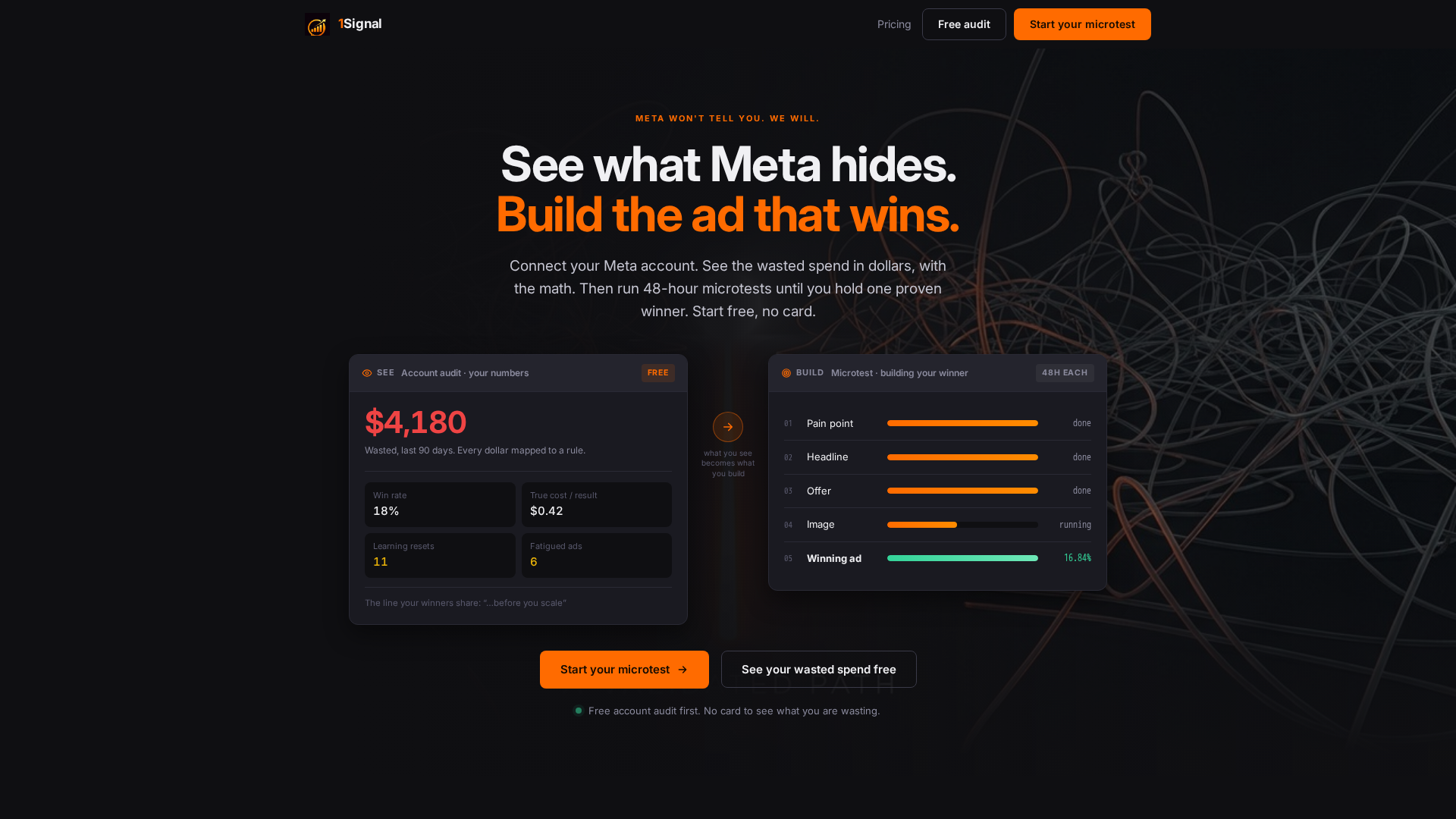 Highlights. Best for early PMF discovery and ongoing validation. Built for structured, decision-driven feedback loops
Specs. Best for: Founders and small teams validating PMF. Signal type: Structured validation workflow. Time to signal: Fast to medium. Validation strength: High with interviews and usage data
Pros. Purpose-built for PMF validation. Keeps feedback organized and actionable
Cons. Needs analytics and interviews for full proof. Less useful for one-off surveys
It ranks first because it helps you decide what to do next, not just collect answers.
Last updated: June 24, 2026
2. [FitSignal](https://www.fitsignal.com/)
FitSignal is built for the classic PMF survey. It centers the “very disappointed” question popularized by Sean Ellis and used in the Superhuman method to track must-have demand fast.
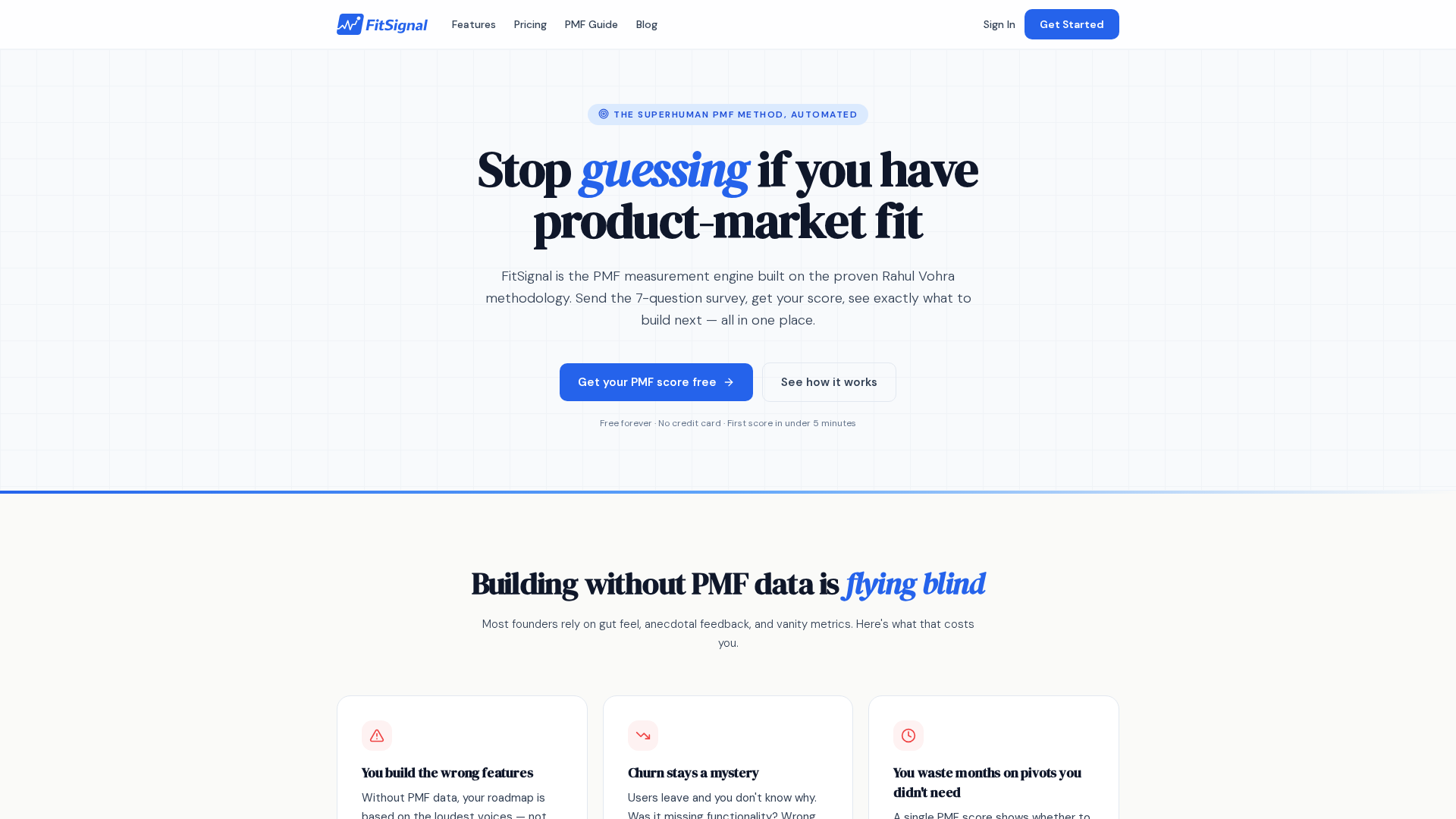 Highlights. Sean Ellis 40% benchmark, segmentation, word clouds, recurring surveys.
Specs. Best for: PMF survey validation. Signal type: Customer sentiment survey. Time to signal: Very fast. Validation strength: Medium to high
Pros. Simple benchmark, easy repeat tracking.
Cons. Survey-only scores can mislead without retention data.
It ranks here because it gives teams a clean, proven PMF score fast.
Highlights. Sean Ellis 40% benchmark, segmentation, word clouds, recurring surveys.
Specs. Best for: PMF survey validation. Signal type: Customer sentiment survey. Time to signal: Very fast. Validation strength: Medium to high
Pros. Simple benchmark, easy repeat tracking.
Cons. Survey-only scores can mislead without retention data.
It ranks here because it gives teams a clean, proven PMF score fast.
Last updated: June 24, 2026
3. [Mixpanel](https://mixpanel.com/)
Mixpanel helps you prove Product Market Fit with behavior, not opinions. It is strong when you need to see who returns, which features stick, and whether usage becomes repeatable through retention reports and cohorts.
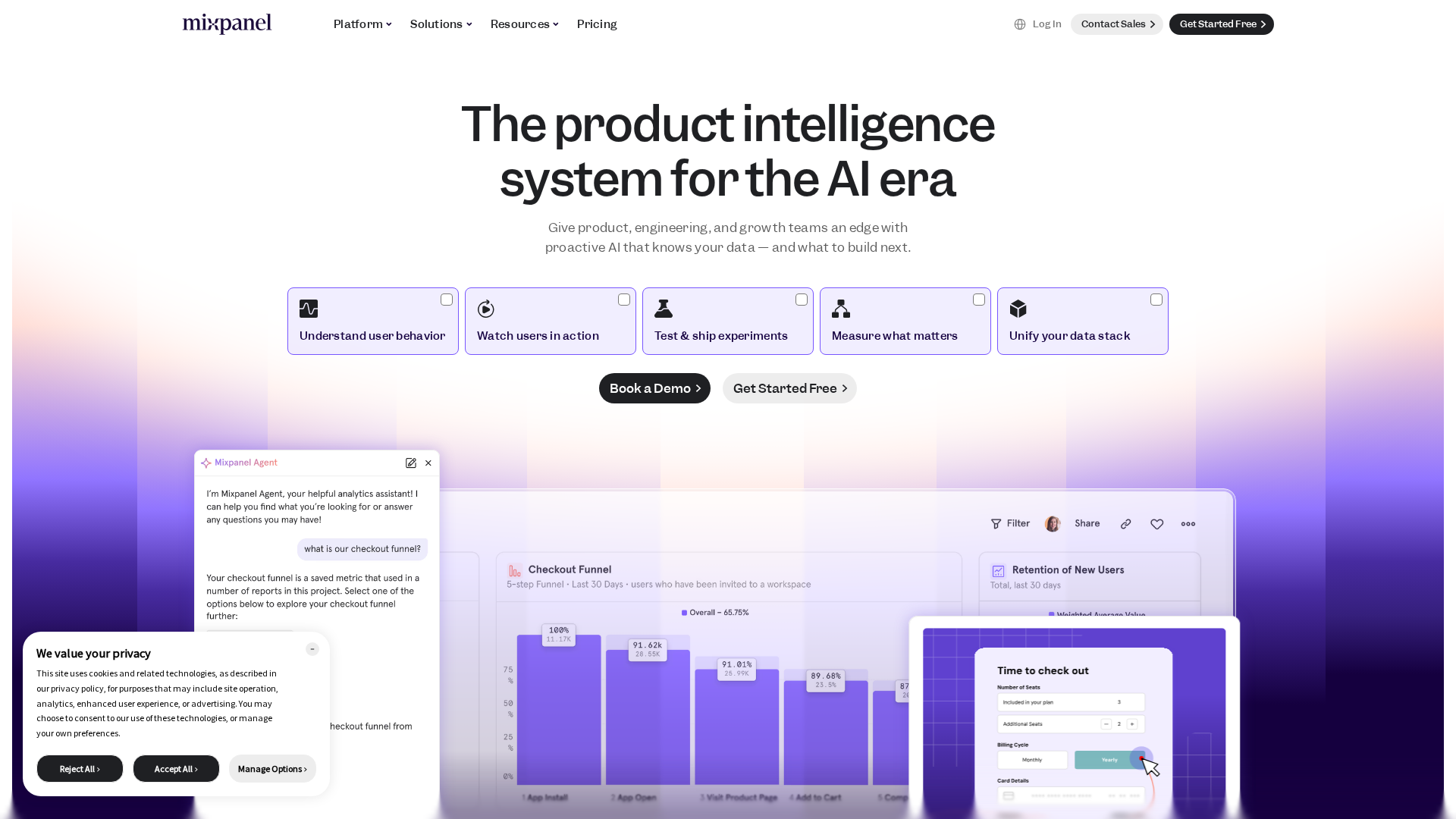 Highlights. Cohort and retention analysis. Product experiments and feature flagging. Session replay and event tracking. Strong for high-value user segments
Specs. Best for: Behavioral PMF validation. Signal type: Usage and retention data. Time to signal: Medium. Validation strength: Very high
Pros. Excellent for tracking real user behavior. Strong for retention-based validation
Cons. Needs event design and analytics setup. Does not replace direct customer feedback
It ranks third because repeat usage is often the clearest proof of fit after sentiment.
Last updated: June 24, 2026
4. [Demand Curve](https://demandcurve.com/)
Demand Curve helps teams test demand, messaging, and conversion paths inside one growth system. It works well when PMF validation needs real market proof through A/B testing and structured ad tests.
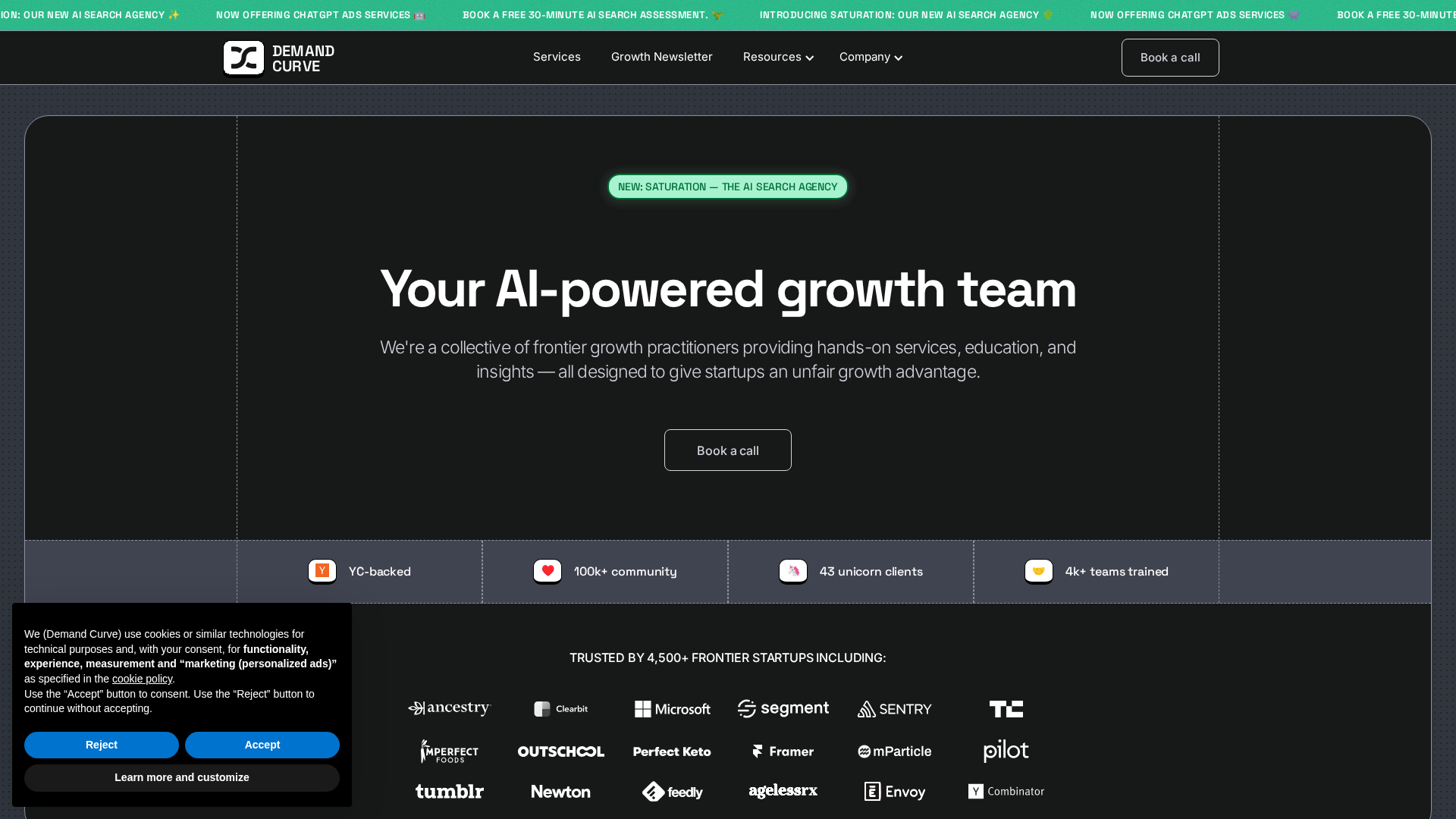 Highlights. Strong growth and experimentation framework. Useful for landing page and ad tests. Helpful for positioning and messaging validation
Specs. Best for: Growth-led validation. Signal type: Market response and conversion. Time to signal: Fast
Pros. Strong for demand and message-market fit testing
Cons. Best results require execution discipline
It ranks here because it shows if the market responds before you scale spend or ship more features.
Last updated: June 24, 2026
Honourable Mentions
These tools did not make the top spots, but they still fit solid validation use cases. If your stage or channel is more specific, these runners-up can be a better match.
- AdCreative.ai. AI ad creative testing to find which messages and visuals pull demand.
- Marpipe. Catalog and creative testing for ecommerce teams validating demand at scale.
- DePulse. Fast pre-build testing for demand, pricing, and launch viability.
How to choose the right PMF validation strategy
Pick the method that matches your biggest unknown. Customer interviews. Start here if you still need to learn the pain, words, and urgency behind the problem.. PMF survey. Use this when you already have active users and want a quick read on whether they would truly miss the product.. Product analytics. Choose this to prove repeat use, retention, and strong cohorts over time.. Ad and landing page tests. Best for checking messaging, offer clarity, and early demand before bigger spend. This is where platforms like 1Signal fit well.. Pricing tests. Run these when value is the main question.
Use at least two methods before you scale. One signal can fool you.
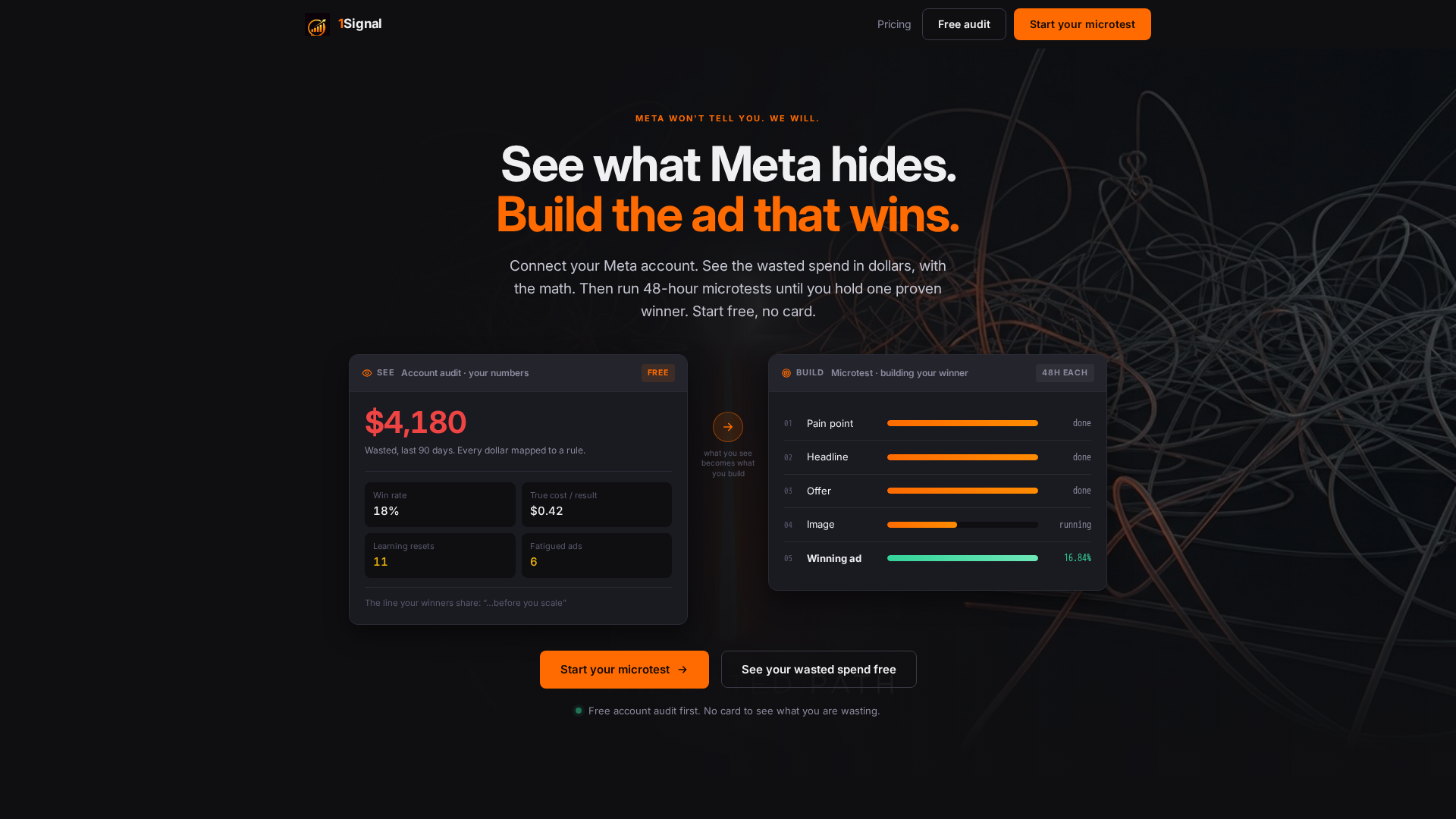
Ready to validate faster? Use 1Signal to run microtests, spot real market signals, cut wasted spend, and prove demand with confidence.
Frequently Asked Questions
Q1: What are the most effective ways to validate product-market fit for startups?
Use customer interviews, landing page tests, waitlists, pre-sales, and small paid acquisition tests. Pair what people say with what they do. The best method depends on stage, price point, and how much real buying intent you can measure.
Q2: How can I measure user sentiment and engagement to confirm product-market fit?
Track retention, repeat usage, referral rate, survey feedback, and support themes. Ask why users stay, leave, or hesitate. Strong fit usually shows up as clear repeat behavior plus consistent language about one painful problem you solve well.
Q3: What are the key metrics to validate product-market fit for new products?
Watch activation rate, retention, churn, conversion to paid, time-to-value, and customer acquisition cost. Add qualitative proof from interviews and lost-deal notes. One metric alone can mislead you, so use a small scorecard instead of chasing one benchmark.